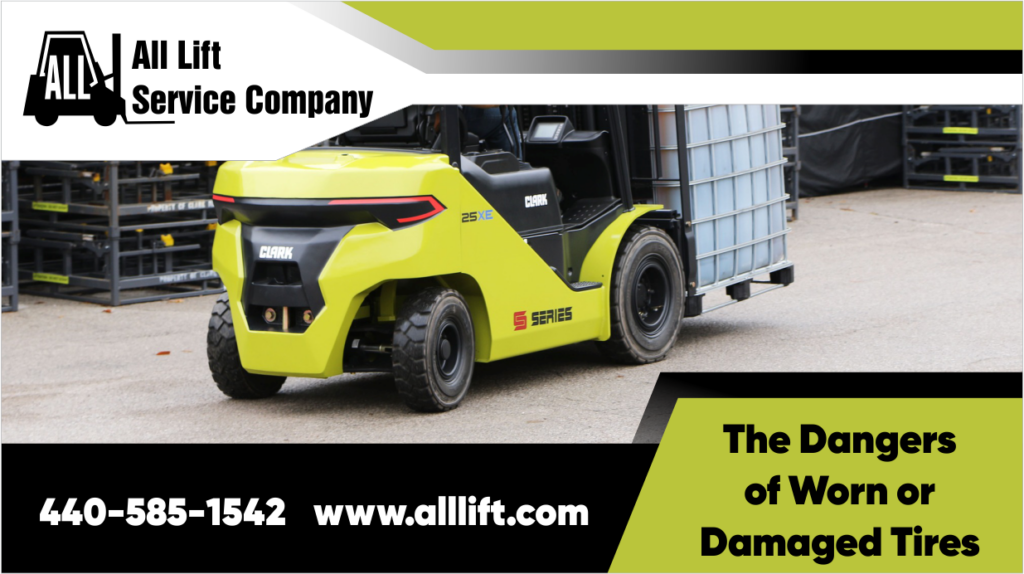
Forklifts are the workhorses of warehouses, distribution centers, and industrial facilities worldwide — but their safe operation depends on far more than a skilled operator behind the wheel. Among the most overlooked components of forklift maintenance are the tires. Small in comparison to the machine they support, forklift tires bear enormous responsibility: they are the only point of contact between a multi-ton vehicle and the ground beneath it. When those tires become worn or damaged, the consequences can range from costly equipment repairs to catastrophic workplace accidents. Understanding the dangers of neglected forklift tires is the first step toward preventing them.
Worn or damaged forklift tires pose serious safety and operational risks:
Safety Hazards
- Tip-overs – Reduced tire stability increases the risk of the forklift tipping, especially when carrying loads or turning
- Loss of control – Worn tread or flat spots reduce traction, making it harder to steer or stop, particularly on wet or uneven surfaces
- Blowouts – A sudden tire failure at speed can cause the operator to lose control instantly
- Increased vibration – Chunked or uneven tires transmit harsh vibration to the operator, causing fatigue and reducing reaction time
Operational Problems
- Reduced load capacity – Damaged tires can compromise the forklift’s rated stability and load-bearing ability
- Uneven wear on other components – Bad tires accelerate wear on axles, bearings, and the mast system
- Mast instability – Uneven tire wear causes the forklift to sit unevenly, which can throw off the load center and mast alignment
Workplace & Infrastructure Damage
- Floor damage – Chunked or flat-spotted tires can gouge and damage warehouse floors
- Rack and structure damage – Poor handling from bad tires increases the chance of collisions with shelving, walls, and equipment
Regulatory & Compliance Risks
- OSHA requires forklifts to be maintained in safe operating condition (29 CFR 1910.178). Operating on worn tires can result in fines, liability, and work stoppages
- Damaged tires that go unreported can invalidate manufacturer warranties and insurance coverage
Key Signs a Tire Needs Replacement
- Tread worn to the wear line (the “60J” line on cushion tires)
- Chunking, cracking, or tearing of the rubber
- Flat spots or excessive vibration during operation
- Visible cord or steel belting showing through
Regular pre-shift inspections and a proactive tire replacement schedule are the best defenses against these risks.
Forklift tire maintenance is not a matter to be taken lightly — it is a critical investment in the safety of your operators, the protection of your facility, and the productivity of your operation. Worn or damaged tires can compromise everything from steering and stability to load capacity and regulatory compliance. Don’t wait for a blowout or a tip-over to take action. All Lift Service is here to help keep your fleet running safely and efficiently. And our mobile tire pressing unit makes it even more convenient to maintain safe and productive lift trucks.
Whether you need a routine tire inspection, a replacement, or comprehensive forklift maintenance, our experienced team is ready to assist. Call us today at 440-585-1542 to schedule a service appointment and ensure your equipment is always road-ready.