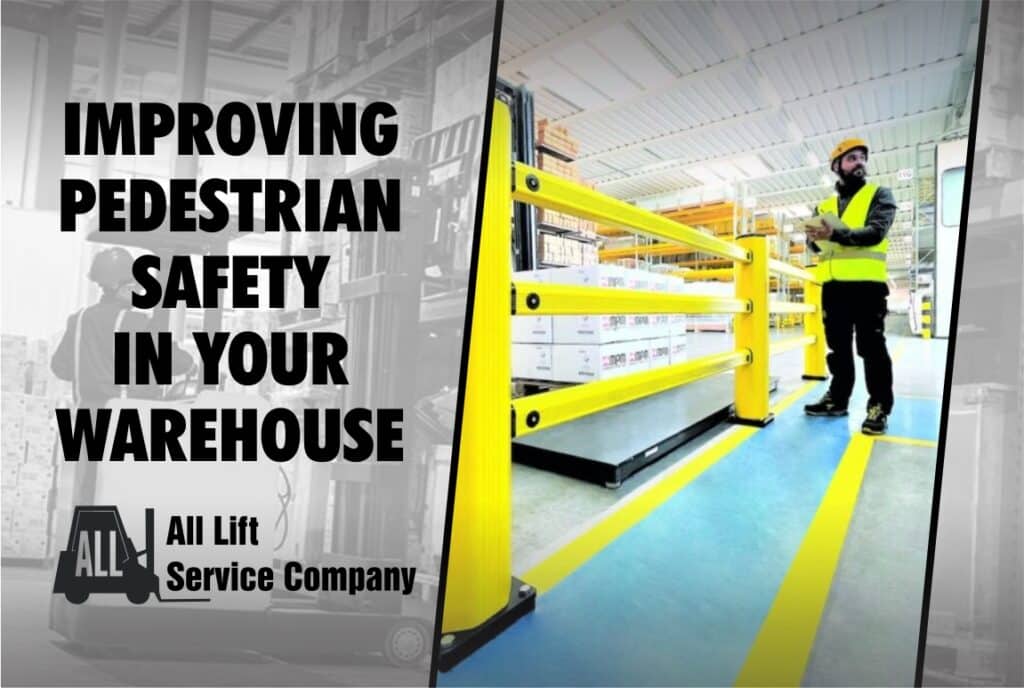
Warehouses can be busy places, and with forklift’s present, the dangers are enhanced. Improving pedestrian safety in your warehouse is crucial for preventing accidents and ensuring a safe working environment. Here are several strategies you can implement:
1. Clear Marking of Pedestrian Pathways
- Floor markings: Use brightly colored tape or paint to clearly define pedestrian walkways. Choose high-visibility colors like yellow or green.
- Signage: Place clear signs that guide pedestrians to safe routes and warn about forklifts or other vehicles.
- Barriers: Use physical barriers such as guardrails, bollards, or chain barriers to separate walkways from areas where machinery is operated.
2. Pedestrian Crossing Zones
- Designate crosswalks at high-traffic areas with clear markings and signs, ensuring pedestrians have right of way.
- Install mirrors at blind spots or intersections so both pedestrians and drivers can see each other before crossing.
3. Improve Visibility
- Ensure the warehouse has adequate lighting in all areas, especially around walkways and intersections.
- Provide high-visibility vests for both pedestrians and forklift operators to make sure everyone is easily seen.
- Use flashing lights or alarms on forklifts to warn pedestrians of their presence.
4. Install Pedestrian Safety Technology
- Proximity sensors or collision avoidance systems: These can alert both forklift operators and pedestrians when someone is nearby.
- Pedestrian detection systems: These systems can trigger alarms when a person enters restricted or hazardous areas.
- Automated gates or barriers: These can control pedestrian movement in and out of certain zones, ensuring only authorized personnel enter high-risk areas.
5. Create Designated Forklift-Free Zones
- Establish zones where forklifts and other machinery are prohibited, especially around employee entrances, break areas, and restrooms.
6. Implement Traffic Management Plans
- Forklift speed limits: Enforce speed limits for forklifts, particularly in areas where pedestrians are present.
- One-way systems: Use one-way systems for forklifts to reduce the risk of collisions in tight spaces.
- Pedestrian flow: Ensure pedestrian walkways lead away from dangerous areas, limiting the need for crossing vehicle routes.
7. Training Programs
- Conduct regular safety training sessions for all employees on pedestrian safety, forklift awareness, and safe walking practices in the warehouse.
- Train forklift operators to be vigilant in areas where pedestrians may be present and how to navigate crossings safely.
8. Enforce Strict Safety Rules
- Develop a strict policy for walking in designated areas and always staying alert.
- Use disciplinary actions for employees who fail to follow safety protocols.
9. Periodic Safety Audits
- Regularly review and audit safety procedures, identifying any potential hazards or areas for improvement.
- Seek feedback from employees about safety issues they encounter.
10. Emergency Stop Zones
- Set up emergency stop zones where forklift operators or other machinery operators can quickly stop if pedestrians are unexpectedly in their path.
These measures can significantly reduce the risk of accidents and improve overall safety in your warehouse environment. Of course, ensuring your forklift operators are thoroughly trained will also go a long way to improving safety for everyone in your warehouse. Learn more about All Lift training courses.